
What is a brand ambassador? A UGC creator's definition
What is a brand ambassador — and how is it different from an influencer or affiliate? Here's what the role actually means for UGC creators.

A brand I know personally pays their top UGC creator $1,500 a month — no posting requirements, no follower count minimums, no performance anxiety. Just a steady contract, monthly content deliverables, and a relationship that's been running for two years. That creator is a brand ambassador. And it looks nothing like what most people picture when they hear that phrase.
So: what is a brand ambassador, specifically through the lens of UGC? Because the term gets thrown around loosely — sometimes it means the same thing as "influencer," sometimes it's used as a fancy word for affiliate, and sometimes it genuinely describes something different and more valuable. I want to clear that up.
What "brand ambassador" actually means for a UGC creator
A brand ambassador is a creator who has an ongoing, contracted relationship with a brand — one built around producing content consistently over time, not just showing up for a single campaign.
That's the core of it. Not a viral moment. Not a one-off sponsored post. A real working relationship where the brand trusts you to represent them repeatedly, and compensates you on a recurring basis.
For UGC creators specifically, ambassador roles usually involve:
- A monthly content quota (say, 8–12 videos per month)
- Usage rights granted for paid ad placements
- A fixed monthly retainer, typically ranging from $500 to $3,000+ depending on the deliverable volume and brand size
- Sometimes: a product allowance, affiliate commission on top, or exclusivity clauses in a specific category
The key word there is ongoing. That's what separates an ambassador from a one-and-done collab. If a brand is treating you like a vendor they ordered from once, you're not an ambassador — you're a freelancer on a single project.
Brand ambassador vs. influencer vs. affiliate: the actual differences
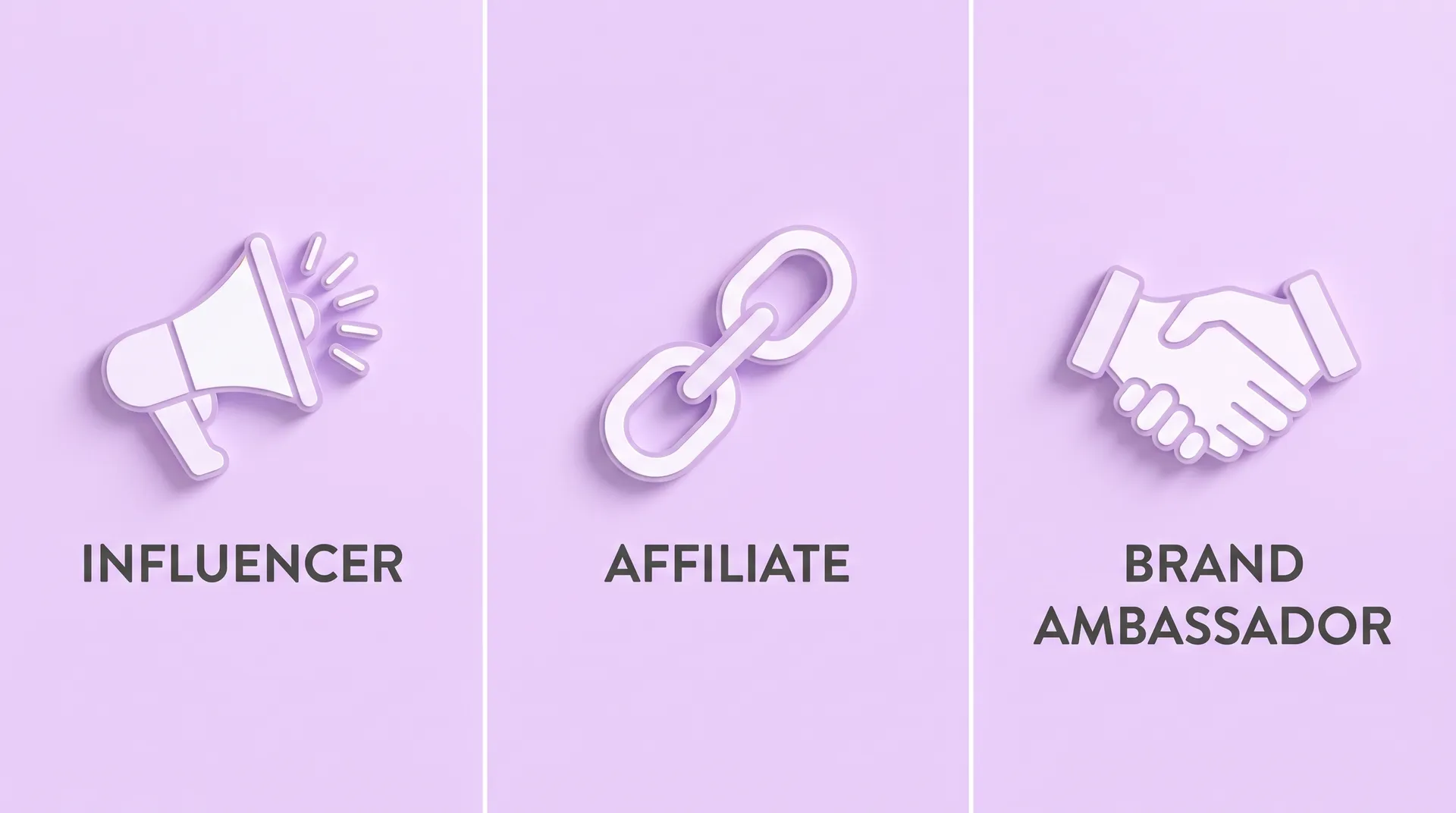
These three terms get collapsed into each other constantly. They're not the same thing.
An influencer is paid primarily for their audience. Brands want access to your followers, your engagement rate, your reach. The content you create lives on your channels and its value is measured by how many eyeballs see it. Follower count matters enormously here. If you have 2,000 followers, most influencer deals won't look at you twice — even if your content is brilliant.
An affiliate is paid on performance. You get a commission link, you share it, you earn a percentage of sales it drives. No fixed payment, no content brief, minimal brand relationship. It's passive income at its best, but it's also the least stable model. You can grind affiliate links for months and make nothing if conversions don't happen.
A brand ambassador — in the UGC context — is paid for content production and relationship continuity. Your audience size doesn't disqualify you. Your job isn't to broadcast to followers; it's to create assets the brand runs as ads, uses on their website, or repurposes across their channels. You're essentially an in-house creative on a flexible contract.
That distinction matters enormously for how you pitch, what you charge, and what you negotiate. I've written more about the structural differences in UGC collaboration vs. influencer post: what's the difference — worth reading if this is new territory for you.
One more thing worth naming: brand ambassadors often — not always, but often — operate with some form of exclusivity. If you agree to be an ambassador for a skincare brand, they'll frequently ask you not to create content for direct competitors during that contract period. That's a negotiating lever, not a given. Make sure it's written into your UGC creator contract and compensated accordingly.
Why this model works so well for UGC creators specifically
Here's the honest appeal: predictable income.
Most UGC creators live project to project. A campaign here, a deliverable there. Some months are great; some months the pipeline dries up. Ambassador retainers change that math. Even one $1,000/month retainer stabilizes your income significantly — and most full-time UGC creators I know carry two or three simultaneously.
Beyond the money, there's a creative upside. When you work with a brand repeatedly, you stop starting from zero on every brief. You know the product. You know the tone. Your content gets noticeably better because you actually understand what you're selling, and brands notice. Research from Nielsen consistently shows that authentic, familiar content outperforms one-off ad creative — which is exactly why brands want ongoing creators, not rotating strangers.
The ambassador model also puts you in a better negotiating position as time goes on. Once a brand is dependent on your content cadence and you've built trust, raising your rates isn't nearly as scary as it sounds. You have leverage that a first-time freelancer never has.
For a deeper look at how to actually land these deals, structure retainers, and negotiate the right terms, the brand ambassador program: the UGC creator's full guide covers all of it in detail.
What a brand ambassador role does NOT look like
I want to be direct about this because there's a lot of noise online selling the "ambassador life" as something it isn't.
Being gifted free products in exchange for posts? That's not an ambassador deal. That's a gifting arrangement, and unless there's a contract and cash involved, you're working for free. Don't accept it and call it a win.
Getting a 10% commission link to a supplement brand you've never used? Affiliate. Not an ambassador. Nothing wrong with affiliate income, but don't confuse it with a brand relationship.
A brand DM-ing you "we'd love to have you as a brand ambassador!" with no contract, no deliverable scope, and no payment discussion? Red flag. The word "ambassador" gets used as flattery constantly. Real ambassador deals have paperwork. They have payment schedules. They define deliverables, usage rights, and term length.
HubSpot's breakdown of ambassador program structures is actually a decent reference for understanding what the brand side of this looks like. Knowing how brands think about these programs makes you a sharper negotiator.
How to know if you're ready to pitch ambassador deals
You don't need a massive following. Full stop.
You do need:
- A portfolio with at least 6–10 polished video samples across a couple of categories
- Some evidence that your content performs (even spec work or content you made for yourself counts early on)
- A rate card and a basic understanding of how to negotiate brand deals before you get on a call with a brand manager
The brands most open to UGC creator ambassador programs aren't the Fortune 500s with agency relationships. They're the direct-to-consumer brands spending heavily on performance ads — supplements, skincare, home goods, pet products — who need a constant flow of fresh creative and can't afford to hire full-time video staff. Those are your best targets. That's also partly why brands are actively shifting budgets toward UGC creators — the ambassador model is cost-effective and scalable for them.
Start by pitching a test package: three to five videos at a fixed rate with usage rights. Nail those, then propose a monthly retainer. Most long-term ambassador relationships I've seen started exactly this way — a small engagement that performed well enough that the brand wanted to lock in the creator.