What is a micro influencer? Follower tiers explained
A micro influencer has 10k–100k followers — but the nano tier below it is stealing brand budgets. Here's how every influencer tier breaks down in 2026.

A brand I know spent $18,000 on a single sponsored post with a 400k-follower fitness influencer. The post got 1,100 likes and zero trackable sales. The next month, they ran ten posts with micro influencers — 8k to 40k followers each — and sold out a product launch in 72 hours.
That gap tells you everything you need to know about why the influencer tier conversation actually matters.
If you're trying to figure out what a micro influencer actually is — the exact follower count, how it compares to a nano or macro, and why brands are suddenly obsessed with the smaller end of the spectrum — this is the breakdown you need.
Micro influencer follower count: where the tier starts and ends
The industry-standard definition puts a micro influencer between 10,000 and 100,000 followers. That's the range you'll see cited by most influencer marketing platforms and agencies, and it's the one brands use when they're scoping creators for campaigns.
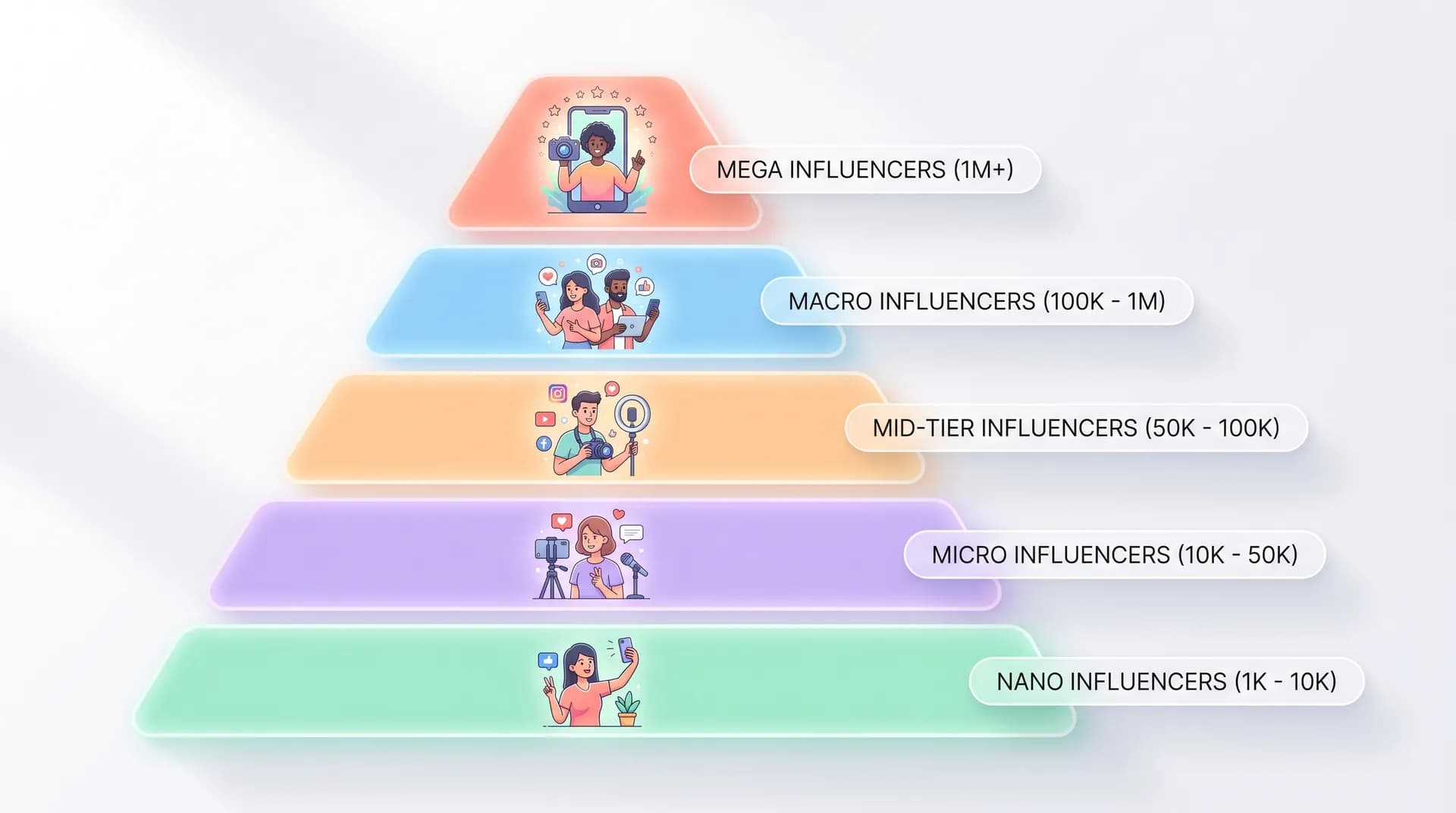
But "micro" only makes sense in context. Here's how the full tier stack typically breaks down:
| Tier | Follower Range |
|---|---|
| Nano | 1,000 – 10,000 |
| Micro | 10,000 – 100,000 |
| Mid-tier | 100,000 – 500,000 |
| Macro | 500,000 – 1,000,000 |
| Mega / Celebrity | 1,000,000+ |
A few platforms draw the micro ceiling at 50k instead of 100k. Some pull the nano floor down to 500 followers. The ranges aren't carved in stone — but the 1k–100k zone is where the most interesting things are happening right now, and that's what this post is really about.
One thing worth calling out: these tiers describe reach, not influence. A 9,000-follower account in a tight-knit hiking community can move product faster than a 90,000-follower lifestyle account posting for everyone and no one. The number is a starting point, not the whole story.
What makes the nano tier (1k–10k) so interesting in 2026
Here's where I'll push back on the standard framing a little.
Most content about "micro influencers" treats the 10k–100k range as the sweet spot and barely mentions nano. That's backwards from what I'm seeing.
The 1,000–10,000 follower nano segment is commanding serious brand attention right now — and for good reason.
Nano creators tend to sit inside a specific community rather than broadcasting to a general audience. A 4,000-follower account run by a registered dietitian who posts for other dietitians has a different kind of authority than a 50,000-follower "wellness" account. The audience trusts them because they are the audience.
The engagement numbers back this up. Influencer Marketing Hub's benchmarks consistently show nano creators averaging engagement rates of 5–7% on Instagram, compared to 1–2% for accounts in the macro range. When a brand's goal is clicks, saves, and purchases — not eyeballs — that math gets compelling fast.

Brands also pay nano creators far less per post, which means a $5,000 budget can activate ten creators instead of one. Ten authentic posts targeting a real community almost always outperform one polished post targeting everyone.
That said, nano creators do face real constraints. Limited reach means brand awareness campaigns are tough to justify. Many nano creators don't yet have a UGC media kit or rate structure — which makes them harder to onboard at scale. And some brands still gatekeep campaigns behind minimum follower thresholds, often 10k, which is starting to feel increasingly arbitrary.
How brands actually use each tier
Brands don't pick a tier at random. The goal of the campaign determines which follower range makes sense.
Nano (1k–10k): Community trust, word-of-mouth conversion, hyper-niche audiences. Think indie skincare brands seeding product with dermatology-adjacent creators, or a local restaurant chain activating food creators in specific cities. This tier is also the natural home for UGC collaboration — where the brand cares more about the content asset than the creator's distribution.
Micro (10k–100k): The workhorse tier for DTC brands. Big enough to reach a meaningful audience, small enough that CPMs are still reasonable and authenticity holds. Instagram influencer marketing at this tier typically delivers the best return on ad spend for brands spending $10k–$50k/month on creator programs.
Mid-tier and above: You're mostly paying for reach and brand legitimacy at this point. The conversion numbers get worse as the follower count climbs, but the awareness numbers justify it for certain campaign types — product launches, brand repositioning, anything where impression volume matters.
The reality is that most serious influencer campaigns in 2026 are mixing tiers. A brand might hire one mid-tier creator to anchor a campaign while seeding 20 nano creators in the same week. The mid-tier post signals credibility; the nano posts drive the actual sales spike.
If you want a full walkthrough of how to build and run campaigns across these tiers, the micro influencer marketing guide covers that end-to-end.
Why engagement rate matters more than follower count
I've watched brands obsess over follower counts for years. It's still the wrong thing to obsess over.
A 6% engagement rate on 8,000 followers means 480 people actively interacting with a post. A 0.9% engagement rate on 200,000 followers means 1,800 interactions — but from an audience so diffuse it's hard to call them a community. Neither number is automatically better. It depends entirely on what you're trying to accomplish.
For brands shifting budget away from celebrity endorsements toward creators who actually convert, the question is increasingly: does this creator have real influence over a real audience? Follower count is one signal. It's not the signal.
This is also part of why brands are shifting budgets from traditional influencers to UGC creators — because the content performs in ads regardless of the creator's following, which completely changes the ROI calculus.
What this means if you're a creator
If you're sitting at 3,000 followers wondering whether you're "big enough" to work with brands — you are.
Most serious DTC brands and agencies are actively looking for creators in the nano tier right now, especially those with a defined niche and real engagement. You don't need 10k to get your first paid deal. You need a clear content angle, a polished pitch, and the ability to show that your audience actually listens to you.
What you do need is a professional setup. That means a proper brand ambassador program approach if you're going for ongoing deals, a clear sense of what you charge, and ideally a media kit that lays out your stats cleanly. Brands aren't scrolling your profile and guessing — they want the numbers handed to them.
Check out UGC creator salary & rates: what to charge in 2026 if you're figuring out where to price yourself — because the nano and micro tiers have very different going rates, and knowing the difference will save you from leaving money on the table.
The creators who are landing deals at 5k followers aren't the ones with the most posts. They're the ones who showed up to the pitch like a professional.
Frequently Asked Questions
What follower count is considered a micro influencer?
What is the difference between a nano and micro influencer?
Do micro influencers get paid?
How many followers do you need to be a nano influencer?
Why do brands prefer micro and nano influencers over celebrities?
Can you be a micro influencer with 5,000 followers?
Related reading
- Micro influencer marketing: the complete 2026 guide — how to run full campaigns across every tier
- UGC collaboration vs. influencer post: what's the difference — understand which deal type makes sense for your follower count
- Brand ambassador program: the UGC creator's full guide — turn one-off deals into long-term partnerships
- Why brands are shifting budgets from influencers to UGC creators — the macro trend reshaping creator compensation
- UGC creator salary & rates: what to charge in 2026 — nail your pricing at every tier