Why brands choose micro & nano social media influencers
Brands are ditching celebrity endorsements for micro and nano social media influencers. Here's the data behind that shift — and what it means for your growth.

A beauty brand I spoke to last year spent $80,000 on a single post from a celebrity with 4 million followers. The post got 12,000 likes. Their conversion rate? Under 0.1%. Two weeks later they ran five nano social media influencers at $500 each and sold out a product variant in 72 hours.
That story isn't a fluke. It's a pattern playing out across every category — beauty, fitness, food, fintech, pet care — and brands are now quietly restructuring their influencer budgets around it.
If you're a small creator wondering why you keep seeing "1,000–50,000 followers preferred" in campaign briefs, this is the explainer you've been waiting for.
Why social media influencers with smaller followings are winning brand budgets
The short version: trust converts better than reach.
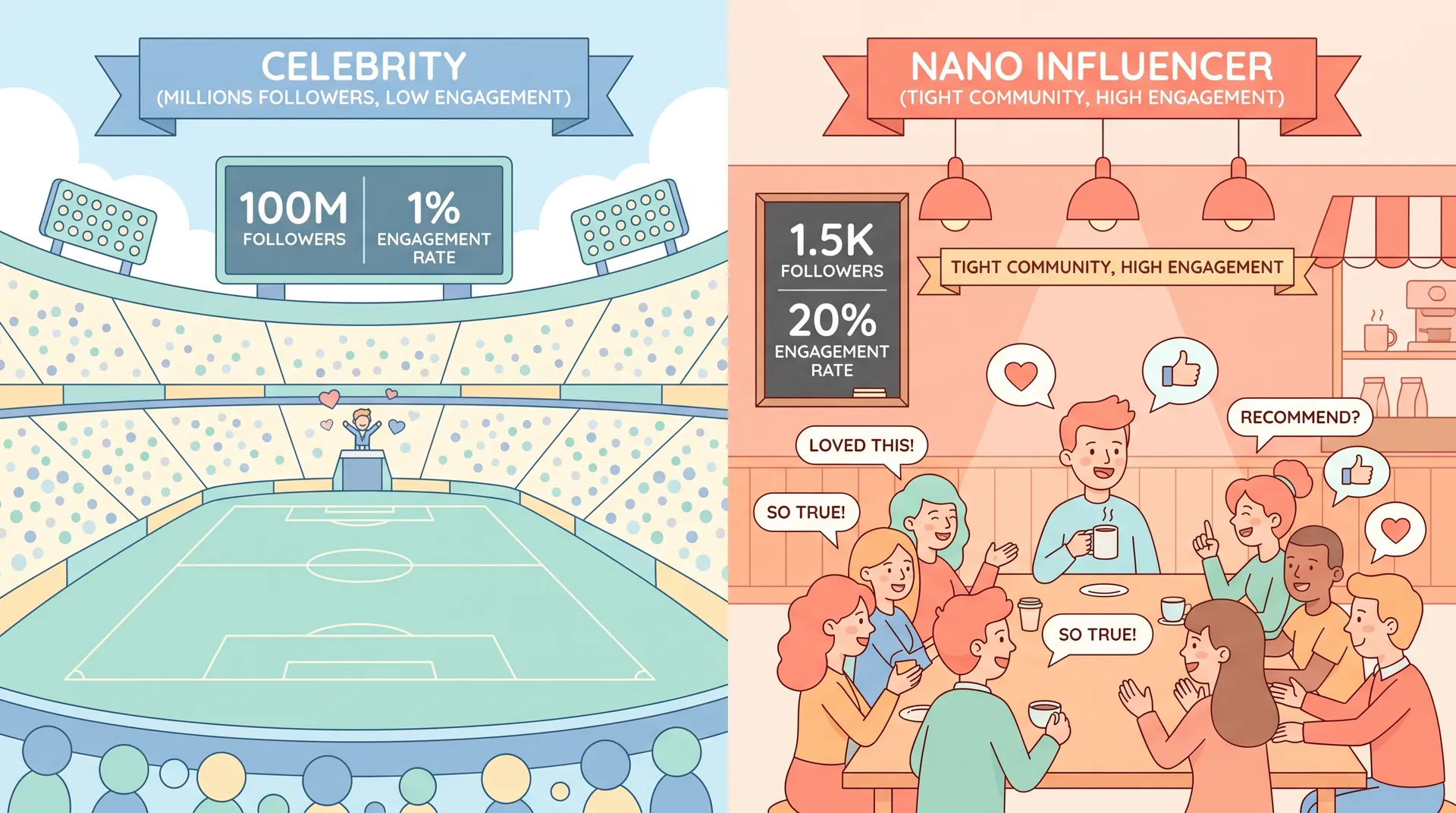
Mega influencers — accounts with 1M+ followers — built their audiences by being entertaining. Nano and micro creators (roughly 1K–100K followers) built theirs by being relatable. Those are fundamentally different relationships, and brands have finally started treating them that way.
A Influencer Marketing Hub study found that nano influencers average engagement rates of 2.53% compared to 1.97% for mega influencers. That might sound like a small gap, but at scale across dozens of creators, it compounds fast. More importantly, engagement from a nano audience skews toward purchase-intent actions — saves, link clicks, and DMs asking "where do I get this?"
The Nielsen Trust in Advertising report consistently shows that peer recommendations outperform celebrity endorsements for driving purchase decisions. Nano creators are peer recommendations. Their followers literally think of them as "that friend who's obsessed with skincare" rather than "a person I watch."
And brands know it.
The engagement rate gap is real — and it's widening
Here's what the numbers look like by tier:
- Nano (1K–10K followers): 2–5% average engagement rate
- Micro (10K–100K followers): 1.5–3%
- Macro (100K–1M): 0.8–1.5%
- Mega (1M+): Often below 1%
These aren't cherry-picked outliers. HypeAuditor's 2024 State of Influencer Marketing report confirms the inverse relationship between follower count and engagement rate across every major platform.
For a brand running a performance campaign with a cost-per-click or ROAS target, this math is brutal at the mega tier. You're paying a premium for an audience that largely ignores the post.
Niche specificity is the other thing brands can't get from celebrities
A fitness celebrity with 3 million followers reaches 3 million generally fitness-aware people. A kettlebell micro influencer with 28,000 followers reaches 28,000 people who specifically care about kettlebell training.
If you're selling kettlebells — or kettlebell programs, or protein powder targeted at home gym enthusiasts — that second audience is worth dramatically more per impression. The targeting is baked in by default.
This is why brands aren't just shifting toward smaller creators in general. They're building rosters of nano and micro creators, each owning a specific corner of an audience. Ten micro creators in ten different sub-niches beats one macro creator every single time for a product with a defined ICP.
The trust problem with celebrity endorsements
There's a cynicism problem at the top of the follower count ladder, and it's getting worse.
Audiences are now fluent in what a paid partnership looks like when it doesn't fit. The "ad" label + a vague caption from someone who clearly didn't use the product = scroll past. Even worse: it can actively damage brand perception when the celebrity is perceived as just cashing a check.
Nano and micro creators operate differently. Their deals tend to align with what they already post about. A $400 sponsorship from a specialty coffee brand fits naturally in the feed of a coffee-obsessed creator with 8,000 followers. The same deal from a pop star looks like a commercial break.
That authenticity isn't accidental. Smaller creators are more selective because they have to be — their audience will call them out immediately if they promote something that doesn't fit. That accountability is exactly what brands are buying.
This is also why we're seeing brands shift from one-off sponsored posts toward longer-term brand ambassador programs with smaller creators. Repeated, organic-feeling mentions build more trust than a single polished post ever could. If you want to understand why that model is taking off, the full breakdown of how brands are shifting budgets away from traditional influencers is worth reading.
The cost-efficiency argument is massive
Let's be direct about the math.
A single post from a mega influencer with 2M followers might cost $20,000–$50,000. For that same budget, a brand could activate:
- 40–100 micro creators at $500 each
- 200+ nano creators at $100–$200 each
More touchpoints. More diverse audiences. More authentic content formats. And because each creator owns a distinct niche, the brand reaches different people — not the same scrollers served the same ad 40 times.
The content brands get back is also usable. Micro and nano creators often produce assets the brand can repurpose as paid social ads, email creative, and website content. That's a second layer of ROI that a single celebrity post rarely delivers.
What this actually means for you as a creator
If you're sitting at 3,000 followers feeling like you're too small to pitch brands — flip that framing immediately.
You're not too small. You're in the tier brands are actively hunting right now. The whole shift I just described? It creates more opportunity at your level, not less.
The things you should focus on: engagement rate over follower count, niche clarity over broad appeal, and content consistency over posting volume. A brand manager looking at your profile doesn't care that you have 3,000 followers. They care that 180 people commented on your last post and half of them were asking about the product in the background.
For the full breakdown of how to position yourself and attract campaigns as a micro or nano creator, our micro influencer marketing guide covers strategy, rates, outreach, and what brands actually look for when they vet small creators. And if you're still figuring out where you fall in the follower tiers, what is a micro influencer? lays it all out clearly.
One more thing worth knowing: the brands pursuing smaller creators aren't just running one-off sponsored posts. Many are building out full ambassador programs where they work with the same handful of creators for months at a time. If that model appeals to you, how to become a brand ambassador with no big following is exactly the playbook for breaking in.
The creator economy is shifting in your favor. The data backs it up, and the brands are already moving. You just have to be visible when they come looking.